
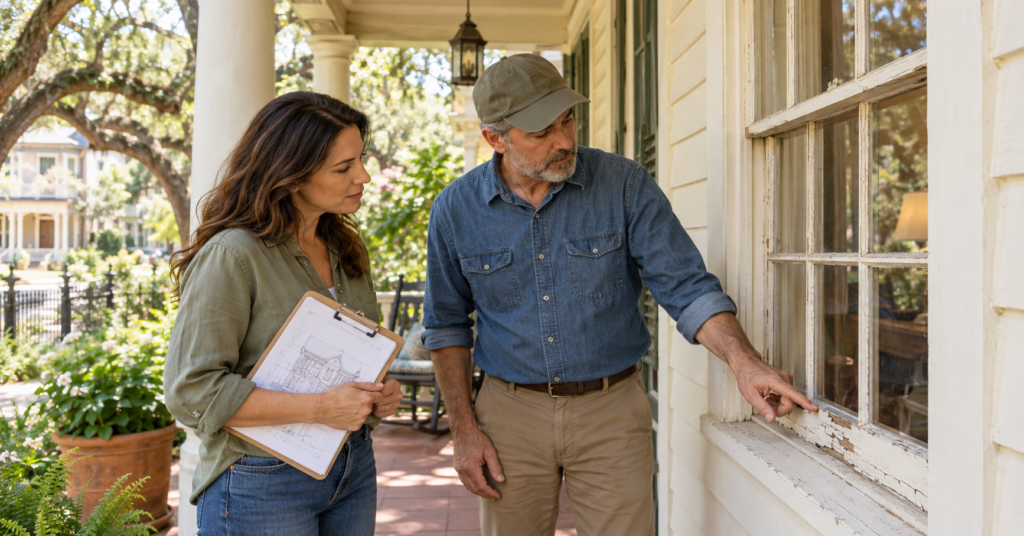
San Antonio historic homes can attract buyers with original windows, detailed porches and established neighborhood settings. Those same features deserve attention when planning repairs. Before pricing replacements or arranging work after closing, find out which approvals apply to the property and what the proposed work would involve.
The useful questions go beyond whether a contractor can complete the job. Buyers should understand the home’s designation, the treatment of existing materials, records of previous alterations and the steps required before construction begins.
Confirm the Property’s Local Designation
A home’s age or a listing’s description of its historic character does not establish its official review status.
San Antonio applies historic designation through zoning overlays. The city identifies H, HS, HE and HL zoning as historic designations subject to Office of Historic Preservation review. Its Explorer Map allows users to search an address and inspect the parcel’s designation information.
Check the exact property rather than relying on the neighborhood’s general reputation. If the map information is unclear, ask the Office of Historic Preservation, known as OHP, to confirm the applicable designation and review requirements.
Keep that response with your purchase records. It gives you a reliable starting point when discussing repairs with inspectors and contractors.
Establish How Each Repair Will Be Reviewed
San Antonio’s guidance states that exterior modifications and repairs on properties with a historic zoning overlay require a Certificate of Appropriateness, or COA. Review extends to side and rear areas that are not readily visible from the street.
A small project may qualify for administrative approval by OHP staff. Other proposals require a public hearing before the Historic and Design Review Commission, or HDRC. Administrative review still produces a written approval; it does not mean that the owner can skip the process.
Describe each task separately when requesting guidance. Repairing porch boards, changing railing details and replacing exterior lighting may be bundled into one contractor estimate, but the application needs to explain what will happen to each feature.
Assess Repair Options Before Choosing Replacements
A replacement estimate can overlook the possibility of retaining existing components.
The city’s window policy identifies several conditions that may be repairable, including broken glass, failed cords, missing hardware and localized deterioration. It also addresses replacement materials, dimensions, trim and installation details when full replacement is approved.
Ask someone experienced with historic windows to document their condition individually. A useful assessment explains the defects, the parts that can remain and the work needed to restore operation.
For example, three damaged windows should not automatically become a proposal to replace every window in the house. Obtain a clear reason for the scope being recommended.
Roofing deserves similar attention. San Antonio’s exterior guidelines favor retaining historic roof forms and distinctive features, with replacement materials matched appropriately to the building.
Request specifications for the proposed roof covering, profile, color and related details. Broad descriptions such as “new metal roof” leave important choices unresolved.
Review Records of Previous Alterations
Before buying, ask the seller for records relating to exterior changes already completed or still underway.
Useful documents include:
- Issued Certificates of Appropriateness.
- Approved drawings and material specifications.
- Building permits and available inspection records.
- Contractor invoices describing the completed work.
- Correspondence about revisions or outstanding conditions.
Compare the documents with the property. If an approval describes repairing original windows but the house now has replacement units, request clarification about any later approval.
For unfinished work, ask OHP whether the existing approval remains valid and what is required to continue it. The city states that COAs are valid for up to six months, so an old certificate should not be treated as open-ended permission.
Resolve missing or inconsistent records through the appropriate city office before relying on a seller’s explanation.
Distinguish Design Approval From Permits and Condition
A COA is one part of the project approval process. San Antonio’s Historic Homeowner Handbook directs owners to confirm additional requirements with the Development Services Department, or DSD. Historic approval does not replace required building permits.
Create a simple responsibility list identifying who will prepare the preservation application, obtain applicable permits and arrange inspections. Ask the contractor to explain which steps are included in the quoted service.
The property’s physical condition also needs its own assessment. A record approving an alteration does not tell you whether the home currently has movement, moisture damage or deferred maintenance.
Our guide to foundation inspections for Texas homes explains warning signs and the information an inspection can provide. Share relevant findings with the professionals developing your repair scope so structural needs and preservation requirements can be considered together.
Prepare a Scope That Someone Else Can Verify
An application should make the proposed work easy to understand.
The city asks for current color photographs showing all sides of the structure and states that Google images are not accepted. Supporting documents should explain the proposed work clearly enough to compare it with the finished result.
Organize your package around specific locations. Label windows, identify the affected wall or roof section and distinguish material being retained from material being replaced.
For a siding repair, your description might identify the damaged boards, their dimensions and profile, the proposed replacement material and the intended finish. For a porch, show which columns, rails or flooring sections will change.
Use the same descriptions in the contractor’s estimate. Matching documents reduce the chance that the application and construction team are working from different assumptions.
Budget for Review, Materials and Scheduling
Ask OHP which review route applies before committing to a firm installation date. A proposal requiring a hearing needs time for the relevant submission schedule, while incomplete information can create additional questions under either route.
San Antonio accepts COA applications through its online portal. Its published fee schedule lists no COA fee for existing single-family residential requests, but other project categories and circumstances can carry charges. Work begun before receiving a required COA is subject to a listed $500 post-work application fee.
The application charge is only one budget item. Ask contractors to identify allowances for specialist repairs, material matching, fabrication, permits and work that cannot be priced until concealed conditions are investigated.
Before ordering custom products, confirm that the specifications match the written approval. Discuss cancellation and return terms with the supplier so those costs are understood.
Manage Changes Once Work Begins
Unexpected deterioration or unavailable materials can change a repair plan. Establish how the contractor will notify you before altering the approved work.
If the project needs a different material, a larger replacement area or another design change, document the issue and ask OHP what revised approval is required. Keep photographs and product information with that request.
Give the contractor the complete approval, including its conditions and referenced drawings. Ask for completion photographs and retain final permits, inspection records and invoices in one property file.
That record will help with future maintenance and give a later buyer a clearer account of what was authorized and completed.
Note: Requirements depend on the property and proposed work. Consult the City of San Antonio’s historic project review guidance and confirm the applicable approvals with OHP and Development Services before starting.