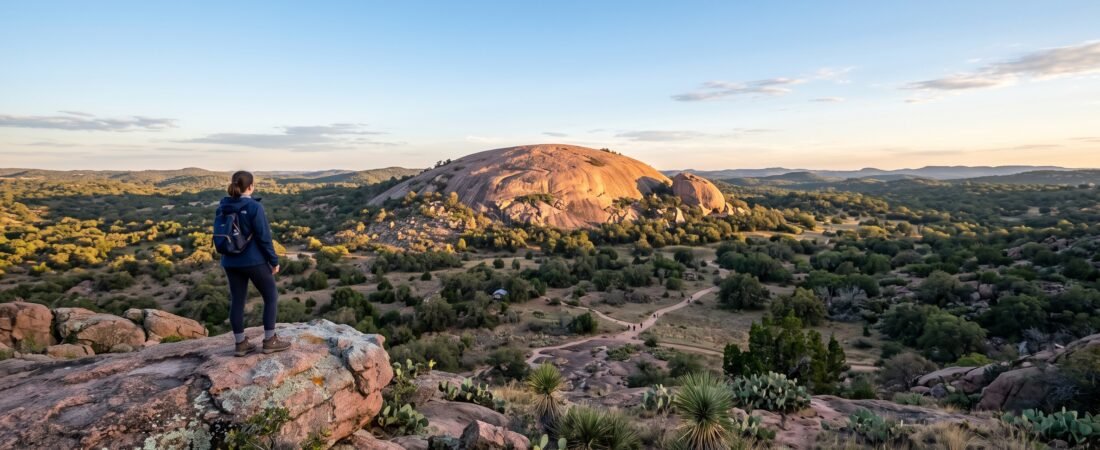
Visiting Texas State Parks requires more planning than simply choosing a destination and arriving at the entrance. Popular parks can reach capacity, overnight sites may be reserved months ahead and entrance charges are often separate from camping fees.
Reservation procedures and available facilities also differ by park. Checking the official information for your destination can prevent problems involving sold-out day passes, unsuitable campsites or activities that are temporarily unavailable.
Choose a Park That Matches Your Plans
Texas state parks include beaches, forests, lakes, canyons, historic sites and desert landscapes. Each park supports a different combination of activities and accommodations.
Before making a reservation, decide whether the trip will focus on:
- Hiking
- Swimming
- Fishing
- Paddling
- Wildlife viewing
- Tent camping
- Recreational vehicle camping
- Cabin accommodation
- Historic attractions
- Accessible outdoor activities
Do not assume every park offers the same experience. A park may have hiking trails without a designated swimming area, while another may provide campsites but no electrical hookups.
Use the official Texas State Parks directory to compare locations and review the individual page for each destination.
Reserve Texas State Parks Early
Texas Parks and Wildlife Department recommends advance reservations because popular parks can fill months ahead. Reservations may be available for day admission, overnight accommodations and certain tours or activities.
Weekends, holidays, school breaks and periods of favorable weather generally create the greatest demand. Parks near major cities may also reach capacity even when no special event is taking place.
The official Texas State Park reservation page provides access to online and telephone reservation options.
When preparing to reserve, have the following information ready:
- Travel dates
- Number of adults and children
- Vehicle license plate information
- Camping-equipment dimensions
- Recreational vehicle or trailer length
- Preferred site type
- Accessibility requirements
- Payment information
Some group facilities, accessible sites and specialized accommodations may need to be reserved by phone.
Day Passes Can Be Important
A day pass reserves admission for a particular park and date. It does not provide an overnight campsite or necessarily include a reserved activity.
Buying a day pass is especially valuable when visiting a popular park during a weekend or holiday. Visitors without reservations may be turned away after the park reaches its safe capacity.
Check the pass details for:
- Arrival window
- Number of visitors included
- Vehicle information
- Entrance-fee amount
- Cancellation terms
- Re-entry procedures
- Required proof of purchase
A state park pass does not automatically guarantee entry when a park is full. Pass holders should still reserve a day-use spot when advance reservations are recommended.
Understand Entrance Fees
Most visitors should expect to pay a daily entrance fee unless an eligible pass or other exemption applies. The amount varies by park and is commonly charged per person rather than per vehicle.
Children within the qualifying age range may enter without a daily admission charge, but families should verify the current policy before traveling.
Entrance fees help support park operations and are different from charges for:
- Campsites
- Cabins
- Group facilities
- Equipment rentals
- Guided activities
- Special tours
- Certain recreational facilities
Review the “Fees and Facilities” section on the individual park’s official page. This provides more reliable information than applying the price from one park to another.
Camping Fees Are Separate
Paying for a campsite does not necessarily cover daily admission for everyone occupying it. Entrance charges may be added for each day of an overnight stay unless visitors have a qualifying pass.
Campsite rates depend on the facilities provided. Common options include:
- Primitive walk-in sites
- Tent-only sites
- Sites with water
- Sites with electricity
- Full-hookup sites
- Screened shelters
- Cabins
- Group camping areas
A low-cost primitive site may require campers to carry equipment farther, bring their own water or use a toilet located away from camp. An RV site may impose length limits or provide only some of the connections a traveler expects.
Read the complete site description before paying.
Consider a Texas State Parks Pass
The Texas State Parks Pass may reduce costs for people who visit parks regularly. According to Texas Parks and Wildlife Department, the pass is valid for one year and provides entrance benefits for the pass holder and accompanying guests when the pass holder is present.
It may also include discounts on eligible camping, equipment rentals and park-store purchases. Restrictions and capacity limits still apply.
The price and benefits can change, so compare the current cost with the entrance charges for your expected trips. Official details are available through the Texas park passes page.
A pass may make sense for:
- Families visiting several parks
- Campers taking multiple trips
- Travelers planning a statewide park itinerary
- Residents living near a park
- Frequent hikers or paddlers
It may offer limited value to someone planning only one short visit. Estimate the entrance charges for everyone in the group before purchasing.
Check Parklands Passport Eligibility
Some visitors may qualify for a Texas Parklands Passport. This program can reduce or waive entrance fees for eligible individuals, including certain seniors, veterans, people with disabilities and Gold Star family members.
Benefits depend on the specific passport category. They may apply only to the eligible holder rather than every person traveling with them.
Applicants must provide the documentation required for their category. Review the current qualifications before arriving so you know which records to bring.
A Parklands Passport affects entrance charges but does not automatically provide free camping, cabins or equipment rentals.
Review Cancellation and Change Terms
Plans involving weather and outdoor activities can change, but refunds are not guaranteed in every situation.
Texas Parks and Wildlife Department states that same-day reservations are nonrefundable. Other changes, cancellations and no-shows may involve deadlines or administrative charges.
Before confirming a reservation, read the current terms and determine:
- The cancellation deadline
- Whether part of the payment is nonrefundable
- How date changes are handled
- What happens after a no-show
- Whether entrance and facility fees are treated differently
- How park closures affect the reservation
Do not assume that personal discomfort with the forecast will qualify for a full refund. A park remaining open may be treated differently from an official closure.
Match the Campsite to Your Equipment
A campsite that is available is not necessarily suitable.
Tent campers should check the size and surface of the tent area. RV travelers need to verify total vehicle length, trailer dimensions, electrical service and turning clearance.
Confirm:
- Maximum equipment length
- Number of permitted vehicles
- Number of occupants
- Tent-pad dimensions
- Electrical connection type
- Water availability
- Sewer availability
- Distance to restrooms
- Parking arrangement
- Generator restrictions
- Shade and surface conditions
Include the tow vehicle when evaluating whether an RV setup will fit. A site listed for a certain trailer length may not provide unlimited space for additional vehicles.
If the description is unclear, contact the park before reserving.
Know the Check-In Procedure
Reservation confirmation does not eliminate the need to check in.
Depending on the park and arrival time, visitors may need to stop at headquarters, present identification, receive a campsite assignment or display a vehicle permit. After-hours procedures vary.
Save the reservation details offline in case mobile service is unavailable. Bring the identification and payment card associated with the booking when possible.
Before arriving late, determine:
- When headquarters closes
- Whether the entrance gate is locked
- How late arrivals are handled
- Where permits are collected
- Whether the assigned site can be occupied after hours
- How to contact park staff
Never occupy an empty-looking campsite without authorization. It may already be assigned to a visitor arriving later.
Follow Campsite Occupancy Limits
Reservations are subject to limits involving people, vehicles and camping units. These limits protect natural resources and prevent overcrowding.
A standard campsite may not accommodate a large gathering simply because additional guests are willing to sleep in vehicles. If the group exceeds the listed capacity, reserve multiple sites or an approved group area.
Keep vehicles on designated parking surfaces. Parking on grass, beside a roadway or at another campsite can damage the landscape and obstruct emergency access.
Visitors who are not staying overnight may still need valid day admission and must leave according to park rules.
Understand Pet Rules
Pets are welcome in many outdoor areas of Texas state parks, but they must remain under physical control. A leash should meet the current park requirements, and an unattended tether is not a substitute for supervision.
Pets may be restricted from:
- Park buildings
- Swimming areas
- Certain trails
- Sensitive wildlife areas
- Cabins or other accommodations
- Locations affected by temporary closures
Owners are responsible for removing pet waste and preventing excessive noise or aggressive behavior.
Texas heat can make trails and pavement dangerous for paws. Bring drinking water and avoid leaving an animal inside a parked vehicle, even for a short period.
A pet that is comfortable at home may react differently to wildlife, unfamiliar dogs or a crowded campground.
Review Alcohol Restrictions
Texas state park rules restrict the public display and consumption of alcohol. Enforcement can depend on whether the activity is visible from a public place.
Do not treat a campsite as exempt from all alcohol rules. Review the current statewide regulations and any park-specific instructions before bringing alcoholic beverages.
Alcohol can also increase the risks associated with:
- Swimming
- Boating
- Heat
- Campfires
- Climbing
- Driving
- Wildlife encounters
The person responsible for the reservation should understand that disruptive behavior can affect the entire group’s ability to remain in the park.
Observe Quiet Hours
Campgrounds often establish quiet periods so visitors can sleep and wildlife disturbance is reduced.
During quiet hours:
- Lower voices
- Turn off amplified music
- Reduce vehicle use
- Follow generator restrictions
- Avoid unnecessary exterior lighting
- Keep pets from barking continuously
Sound carries farther in an open campground than it does in a neighborhood. A conversation or speaker that seems quiet at your campsite may disturb visitors several sites away.
Some parks impose specific generator operating hours in addition to general quiet rules.
Check Current Fire Conditions
Campfires may be allowed only in designated fire rings or grills. Temporary burn bans, wildfire danger and local restrictions can prohibit fires even when a campsite normally includes a ring.
Before bringing firewood, determine:
- Whether fires are currently permitted
- Where they may be built
- Whether charcoal is allowed
- Whether camp stoves remain permitted
- Whether outside firewood is restricted
- How ashes must be handled
Never leave a fire unattended. Extinguish it completely before sleeping or leaving the campsite.
Do not collect plants, branches or other natural material unless the park explicitly allows it. Dead wood still contributes to habitat and soil health.
Use Generators Only Where Permitted
Generator rules differ by campground and site type. Some areas limit operating hours, while others prohibit generators because of noise or site design.
Operate a permitted generator outdoors and follow its manufacturer’s safety instructions. Exhaust can cause deadly carbon monoxide exposure when directed toward a tent, shelter, RV opening or neighboring campsite.
Additional precautions include:
- Keeping the generator dry
- Allowing it to cool before refueling
- Storing fuel safely
- Using properly rated cords
- Preventing children from approaching it
- Turning it off during quiet hours
A generator should never be operated inside a tent, vehicle, cabin or enclosed storage compartment.
Check Swimming Conditions
Not every body of water inside a state park has a lifeguard. Natural swimming areas can include drop-offs, submerged objects, currents, algae, bacteria and changing water levels.
Before entering the water:
- Read posted warnings
- Check whether swimming is open
- Identify designated areas
- Supervise children directly
- Use appropriate flotation equipment
- Avoid swimming during storms
- Stay away from boat traffic
- Follow instructions from park staff
Water access may close because of flooding, drought, contamination, construction or unsafe conditions. A camping reservation does not guarantee that every recreational feature will be open.
Confirm Fishing Requirements
Fishing opportunities vary by park and body of water. Texas Parks and Wildlife Department may waive the ordinary license requirement for certain fishing activities inside state parks, but the waiver does not apply in every possible situation.
Location, access point, fishing method and applicable regulations can affect the requirement. Size limits, bag limits and species rules may still apply even when a license is not required.
Check the individual park page and the current statewide fishing regulations before bringing equipment. Do not assume that a park entrance receipt replaces every permit or endorsement.
Keep Wildlife Wild
Feeding wildlife is unsafe and can change animal behavior. Secure food, trash and scented items rather than leaving them outside overnight.
Depending on the park, visitors may encounter:
- Snakes
- Alligators
- Bears
- Javelinas
- Raccoons
- Coyotes
- Feral hogs
- Scorpions
- Biting insects
Ask park staff about local food-storage practices and recent wildlife activity. Observe animals from a safe distance and never move closer for a photograph.
Parents should prevent children from reaching into rock gaps, wood piles or vegetation where an animal may be concealed.
Protect Trails and Natural Features
Remain on established trails where required. Shortcuts can damage vegetation, accelerate erosion and place visitors near unstable terrain.
Visitors should not remove:
- Plants
- Rocks
- Fossils
- Antlers
- Historic objects
- Wildlife
- Archaeological material
Leave natural and cultural features where they are found. Report a potentially significant object to park staff rather than moving it.
Follow posted restrictions around caves, nesting areas, restoration sites and sensitive habitats.
Plan Around Texas Weather
Weather conditions can differ considerably across the state. A spring trip could involve severe thunderstorms in one region and dangerous heat in another.
Before traveling, check:
- Daytime and overnight temperatures
- Severe-weather risk
- Flash-flood potential
- Wind
- Fire conditions
- Road closures
- Water availability
- Trail conditions
Do not depend on the availability of a cabin, picnic shelter or restroom as emergency storm protection. Ask park staff where visitors should go if severe weather develops.
During hot conditions, begin strenuous activities early, carry adequate water and adjust plans for children, older adults, pets and people with medical conditions.
Prepare for Limited Mobile Service
Many Texas state parks have weak or unavailable cellular service. Complete important tasks before arrival.
Download or save:
- Reservation confirmation
- Park maps
- Trail maps
- Weather information
- Emergency contacts
- Facility details
- Driving directions
Tell someone outside the traveling group which park you are visiting and when you expect to return.
A phone can provide useful assistance, but it should not replace a paper map, adequate supplies or a clear itinerary.
Ask About Accessibility Before Booking
An accommodation described as accessible may address particular physical features without meeting every visitor’s individual needs.
Contact the park when you need information about:
- Path surfaces
- Slopes
- Restroom layouts
- Campsite dimensions
- Accessible showers
- Water access
- Trail conditions
- Building entrances
- Parking proximity
Weather and maintenance can temporarily affect accessible routes. Confirm current conditions close to the visit rather than relying only on older photographs.
Texas State Parks Checklist
Before departure, confirm that you have:
- Reserved day admission or an overnight site
- Reviewed entrance and facility charges
- Checked cancellation terms
- Confirmed campsite dimensions
- Added vehicle information
- Saved the reservation offline
- Checked headquarters hours
- Reviewed pet restrictions
- Checked fire and generator rules
- Downloaded park and trail maps
- Reviewed weather conditions
- Packed sufficient water
- Confirmed activity availability
- Shared the itinerary with someone at home
- Prepared an alternative plan if the park closes
A visit to Texas State Parks is easier when reservations, costs and rules are reviewed together. Secure entry before a busy travel date, choose a site that fits your equipment and check the individual park page for restrictions that may not apply statewide.
Note: This article provides general information only and does not constitute legal, medical, travel or outdoor-safety advice. Park fees, reservation policies, facility availability and rules can change. Confirm current requirements directly with Texas Parks and Wildlife Department and the individual park before traveling. Consult an appropriately qualified healthcare, legal, mechanical or outdoor professional when you need advice about your particular circumstances. Contact park staff or call 911 during an emergency.